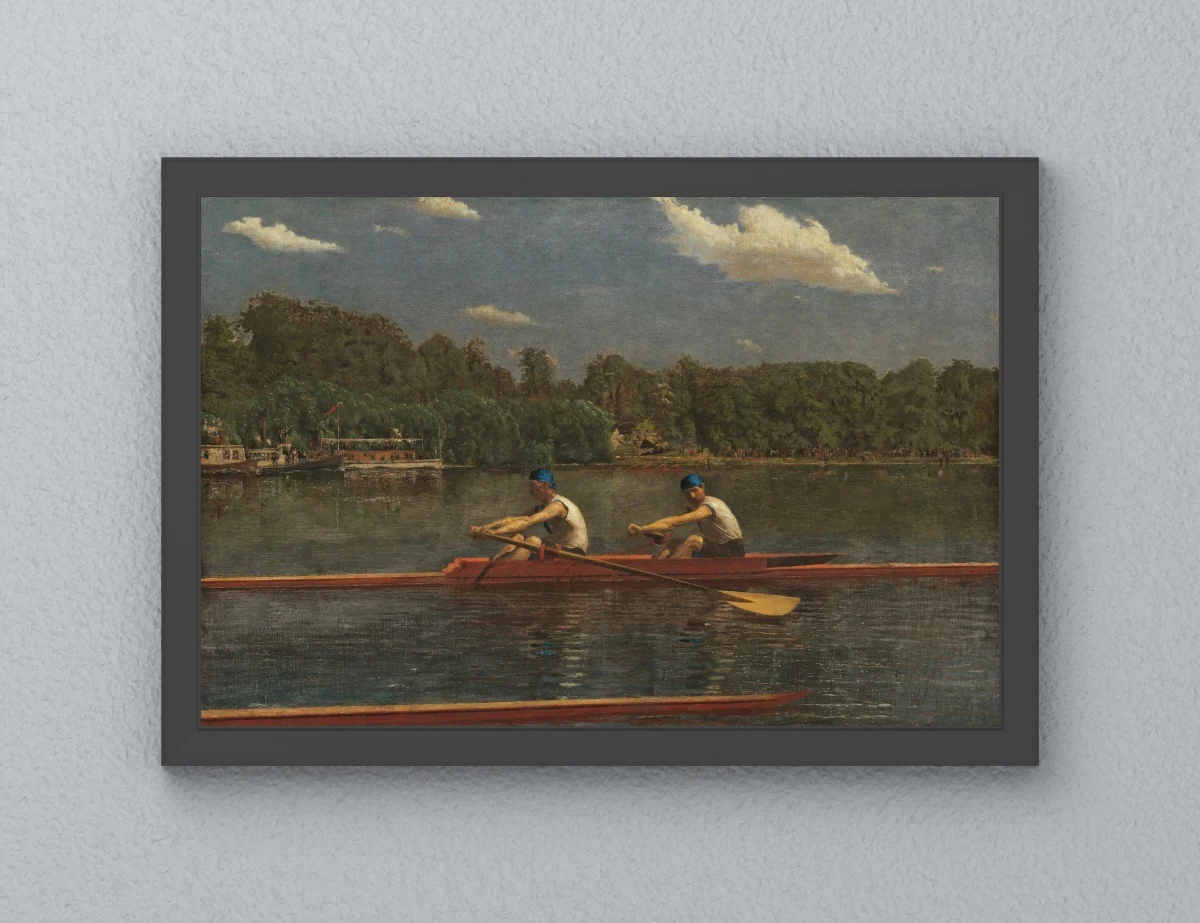
A slim charcoal frame and a pale blue-grey wall carry on the calm of the river.A digital framing study made in Wallside.
THE ARTWORK
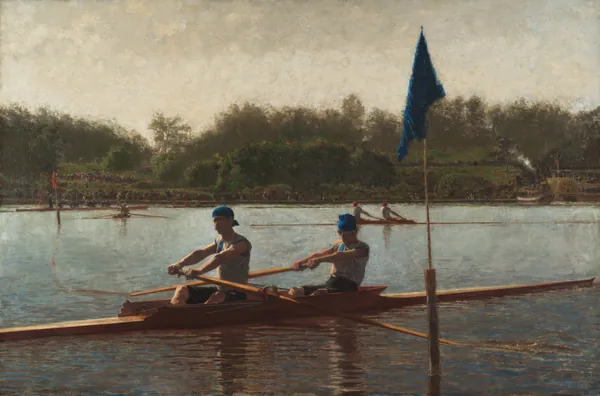
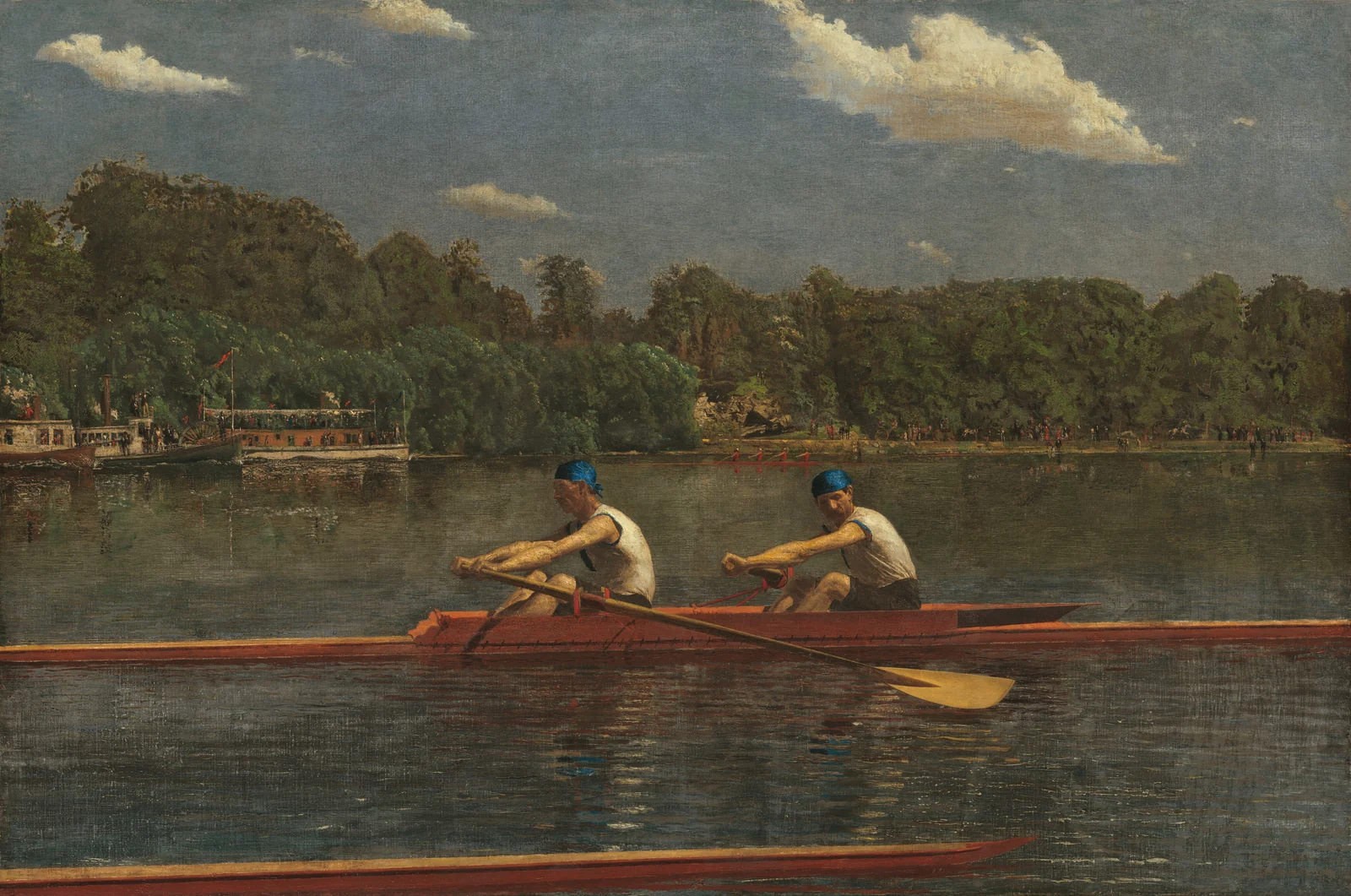
The Biglin Brothers Racing
Thomas Eakins
1872
Two brothers, one racing shell. One begins his next stroke while the other checks the rival boat. Eakins captures their speed in the rhythm of bodies, oars and reflections.
Behind the artwork
In May 1872 a pair-oared race was held on the Schuylkill River in Philadelphia. Racing were John and Barney Biglin, professional oarsmen from New York. The National Gallery of Art says the painting was probably based on that race, which the brothers won; Eakins was a keen rower himself and painted the subject several times.
The picture stops on a single instant: one brother begins his next stroke while the other glances at the stern of the rival boat to judge their position. The far bank is pressed into a thin strip of trees and shore, leaving only two men and their rhythm.
That stillness isn't luck. The Cleveland Museum of Art owns Eakins's perspective study for another Biglin brothers painting: grid lines run across the water, matching the reflections of the figures precisely. The museum says this practice of plotting space in perspective first goes back to the Renaissance and comes from his rigorous academic training.
Our view: Eakins turned a sport of muscle and sweat into a cool geometry problem. That's exactly why the speed in the picture feels so real — it isn't blurred; it is pinned down with precision.
A frame for this work
A race, painted as a geometry problem
The picture is wide, calm and restrained, so the frame is restrained too: a slim charcoal frame like the gunwale of the shell, and a pale blue-grey wall that carries the colour of the river outward.
A slim charcoal frame and a pale blue-grey wall carry on the calm of the river.
About the Wallside app