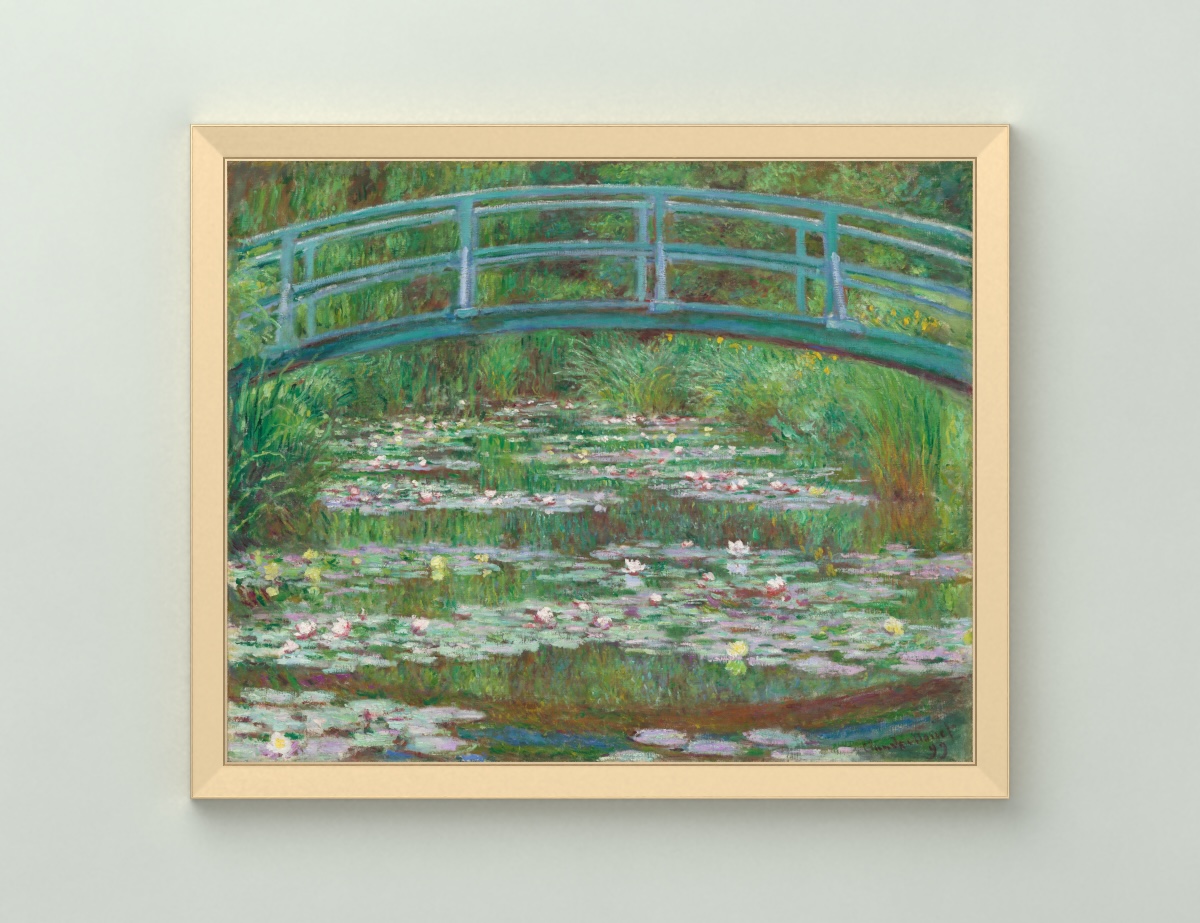
A slim champagne-gilt frame and a soft mist-green wall turn the pond's green into a wall.A digital framing study made in Wallside.
THE ARTWORK
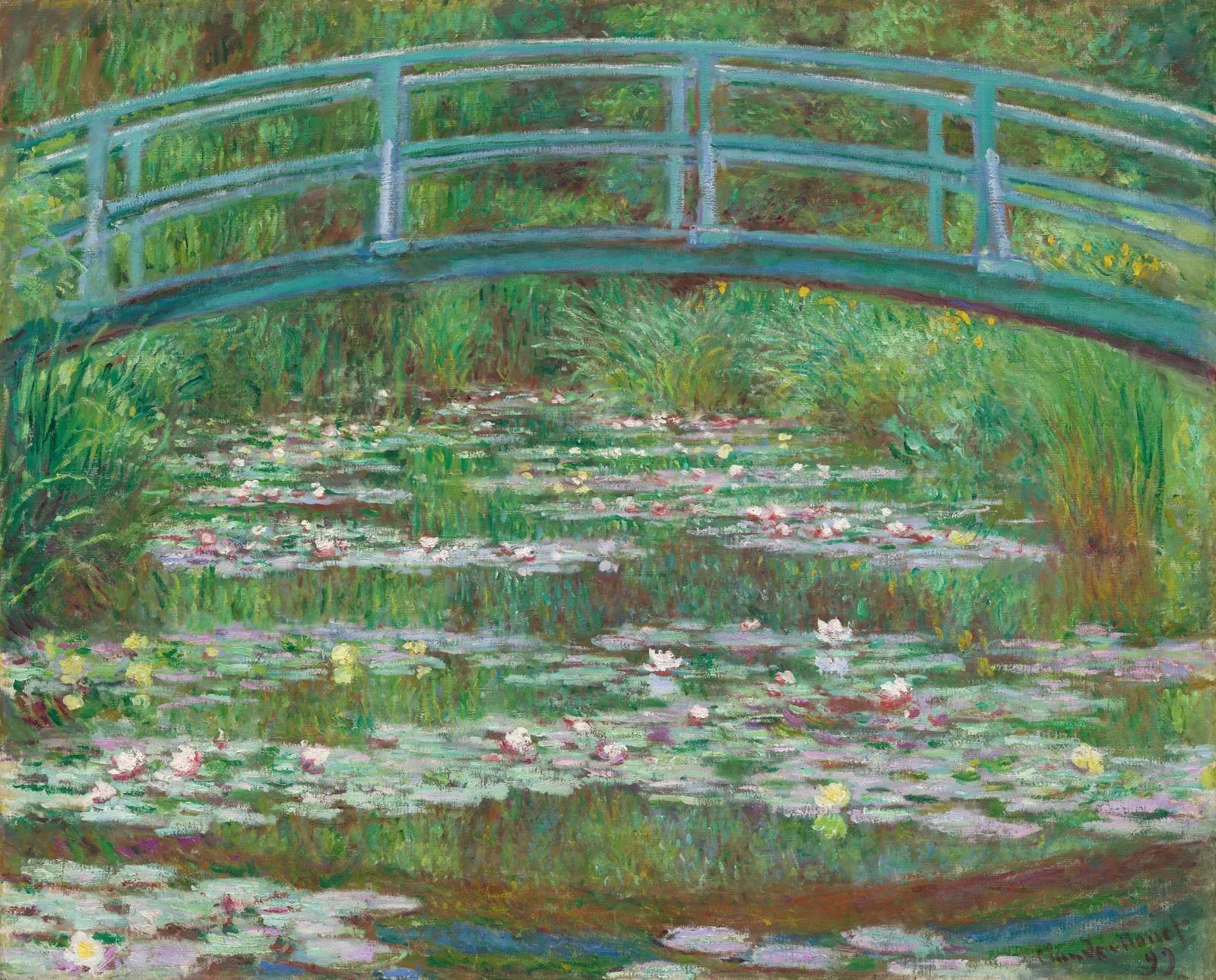
The Japanese Footbridge
Claude Monet
1899
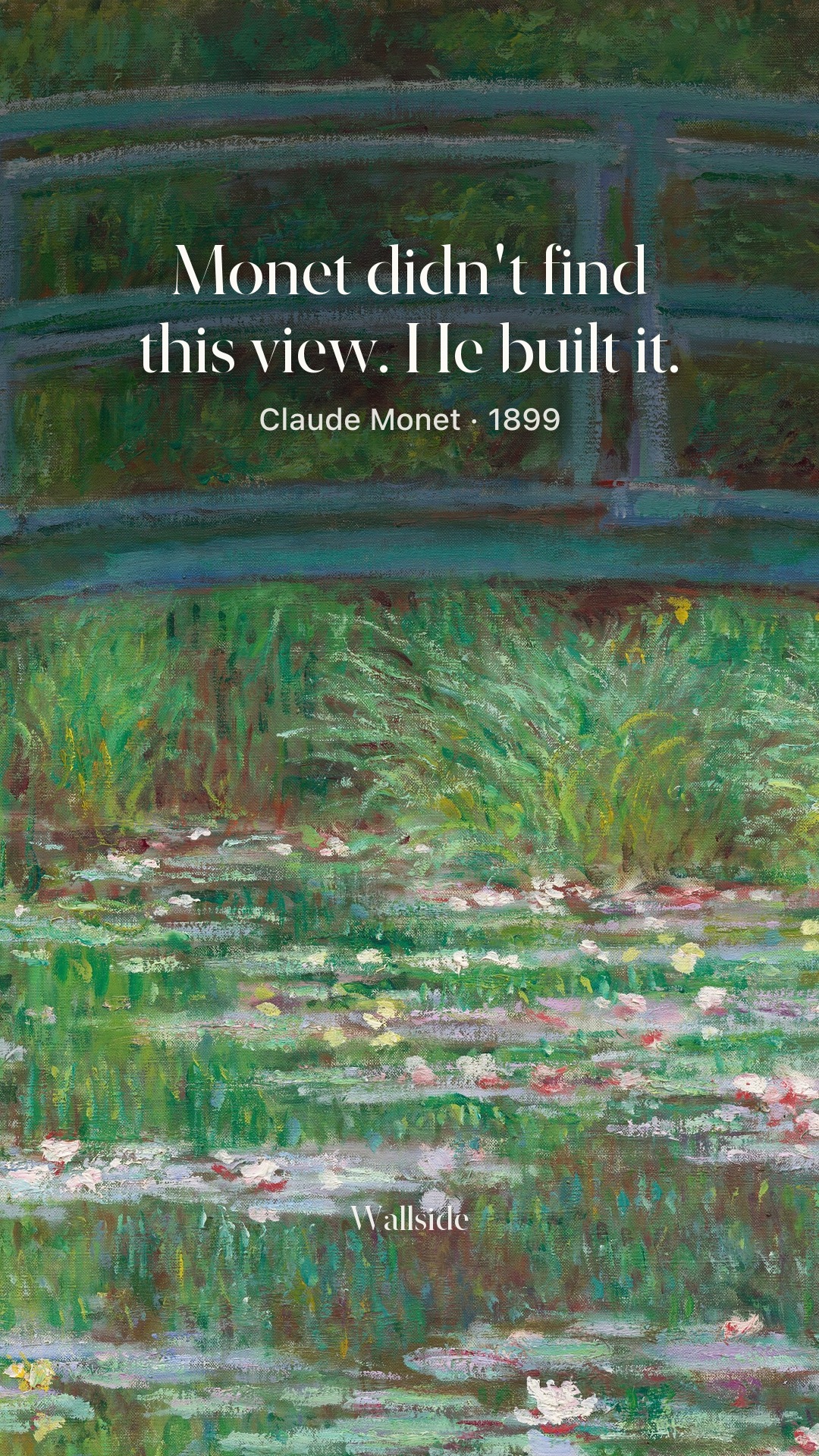
The bridge, the pond, the water lilies, every clump of planting on the banks — Monet designed and grew all of it himself. In 1899 he stood in one spot and painted this garden twelve times.
Behind the artwork
In 1883 Monet moved his household to the village of Giverny. Ten years later he bought a swampy plot across the railway and petitioned the village council to divert a small stream into it. The National Gallery of Art says it was only toward the end of that decade that he turned to this hand-built water garden as a source for painting.
In 1899 he painted twelve works from the same vantage point, focused on the arching blue-green bridge and the small world of the pond; this is one of them. The museum points out a contrast: the Impressionist leader who once championed direct observation and fleeting light was now giving long, sustained attention to a nature he had re-created himself.
When the paintings were shown at Durand-Ruel's gallery in 1900, several critics mentioned his debt to Japanese art. The museum also notes that the top of the bridge's arch sits just below the upper edge, so the whole picture is closed in by green, like the enclosed garden of medieval imagery. The critic Gustave Geffroy described 'a calm pool, immobile, rigid, and deep like a mirror'.
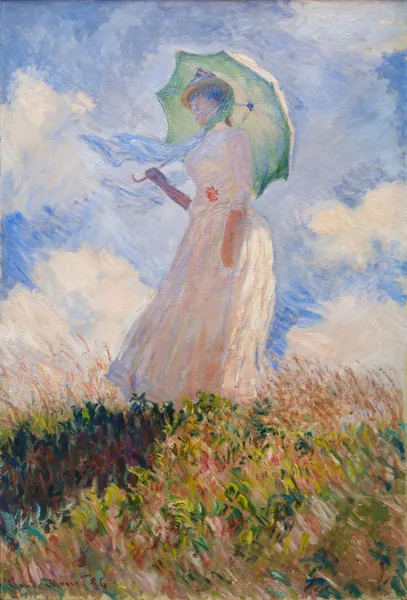
Our view: compared with Woman with a Parasol, painted in a single afternoon in 1875, this Monet is no longer chasing a gust of wind. He is building a place you can keep looking at.
Watch the short
A frame for this work
He painted a garden he built
The painting is a world closed in by green, so the wall is a soft mist green, as if the garden carried on; a slim champagne-gilt frame adds just one bright edge, echoing the light on the water.
A slim champagne-gilt frame and a soft mist-green wall turn the pond's green into a wall.
About the Wallside app