Walnut cove frame · grey-green cotton mat · warm plaster wallA digital framing study made in Wallside.
THE ARTWORK
Three Jockeys
Edgar Degas
ca. 1900
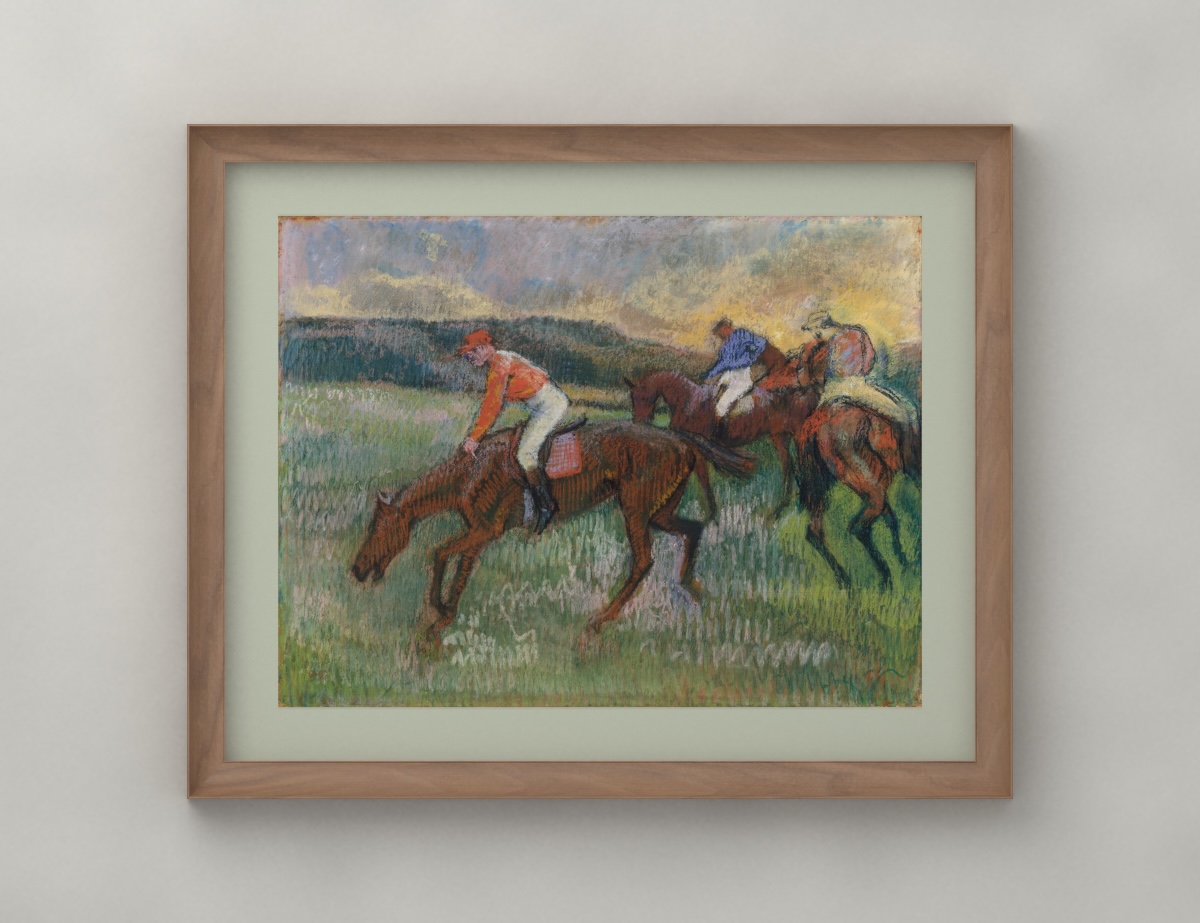
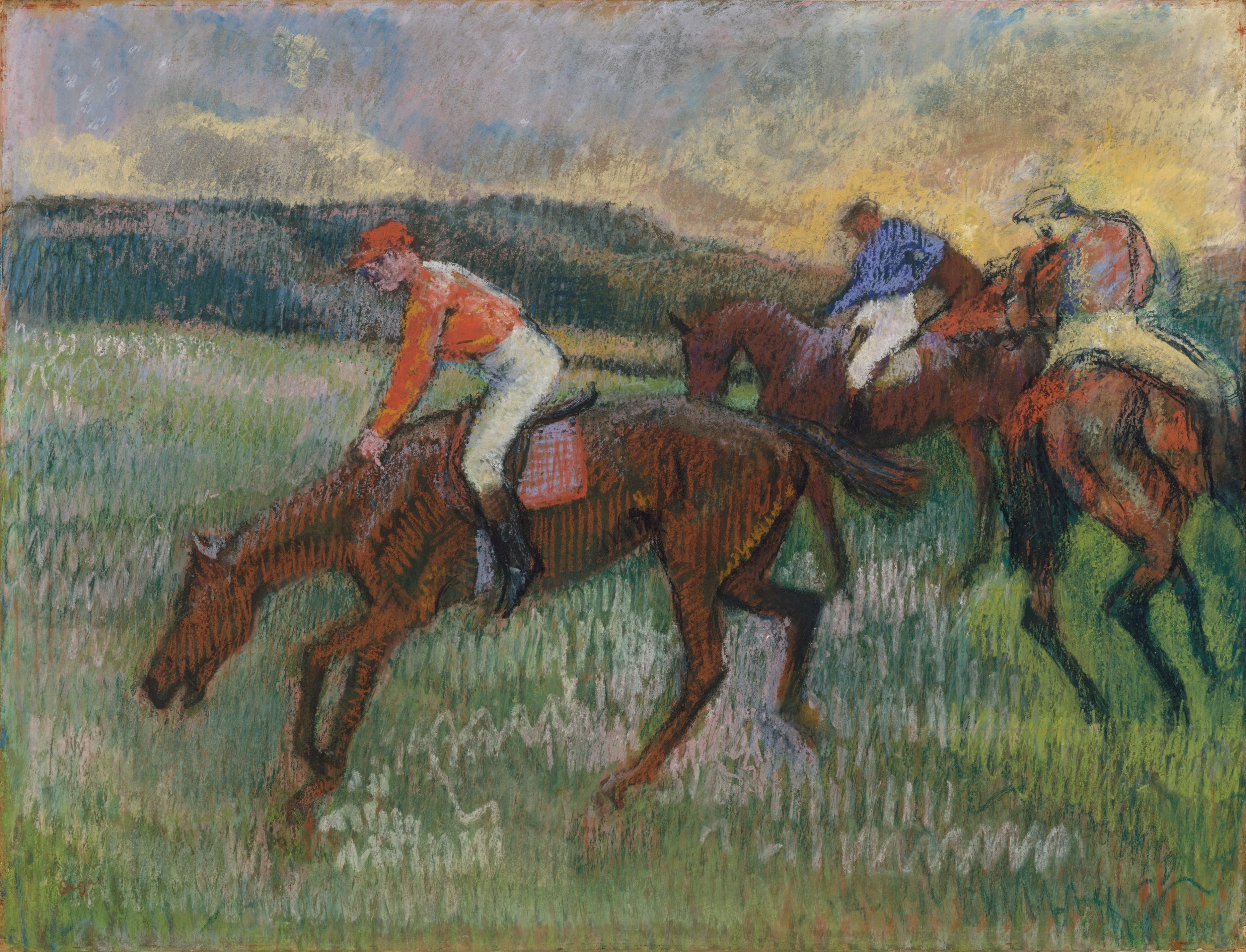
Orange-red and blue-violet riding silks stand out against grey-green grass. A horse lowering its head turns the pace of the racecourse into a brief pause.
Discover the story ↓Behind the artwork
Degas made Three Jockeys around 1900 in pastel on tracing paper, mounted on board. It is now in The Metropolitan Museum of Art, New York. The museum reads the foreground horse’s lowered neck as either grazing or an attempt to unseat its rider: an uncertain, faintly humorous moment. The horse and rider on the right were added later, partly hiding another pair.
Start in the foreground. The horse’s neck reaches diagonally towards the lower left; the rider in orange-red bends with it, while a dark boot draws a firm line against the animal’s flank. On the right, horses and riders crowd together and continue beyond the picture edge. This asymmetry carries the eye between open grass and overlapping bodies.
Colour is built from crossing strokes rather than smooth, filled-in shapes. Green, pink, blue and ochre lines leave glimpses of the paper between them. A dark blue-green band steadies the distance, while pale yellow and blue-grey open up the sky above. Close up, the surface is a mesh of grainy marks; step back, and the horses, riders and airy grass gather into form.
A frame for this work
Hold the movement for a moment
A walnut cove frame picks up the horses’ brown tones, its recessed profile giving the pastel a quiet boundary. A grey-green cotton mat carries the cool grass outward and softens the transition from paper to wood, leaving the orange-red and blue-violet silks vivid. The gently grained warm plaster wall echoes the pastel marks, keeping the setting light without competing with their colour.
Walnut cove frame · grey-green cotton mat · warm plaster wall
About the Wallside app