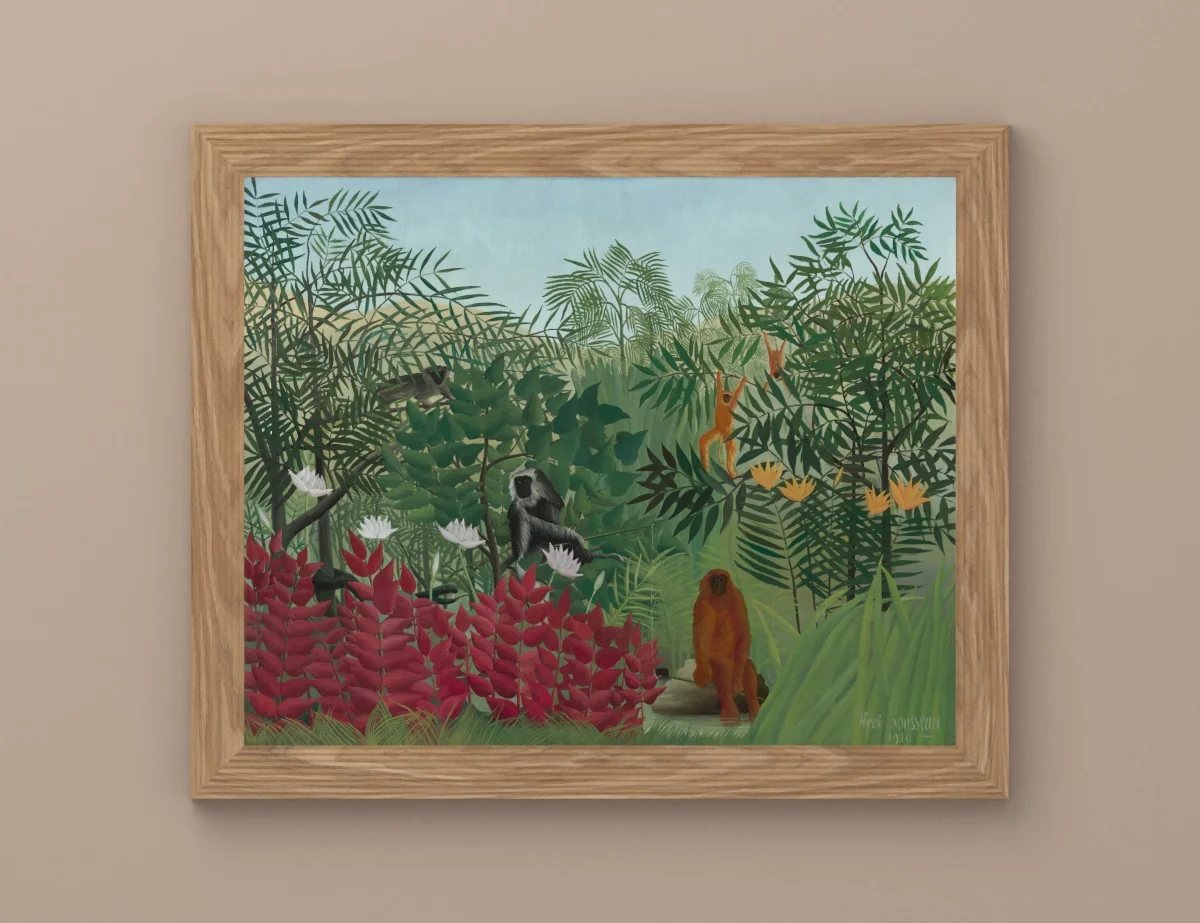
A pale oak reeded frame and a warm terracotta plaster wall bring out dozens of greens.A digital framing study made in Wallside.
THE ARTWORK
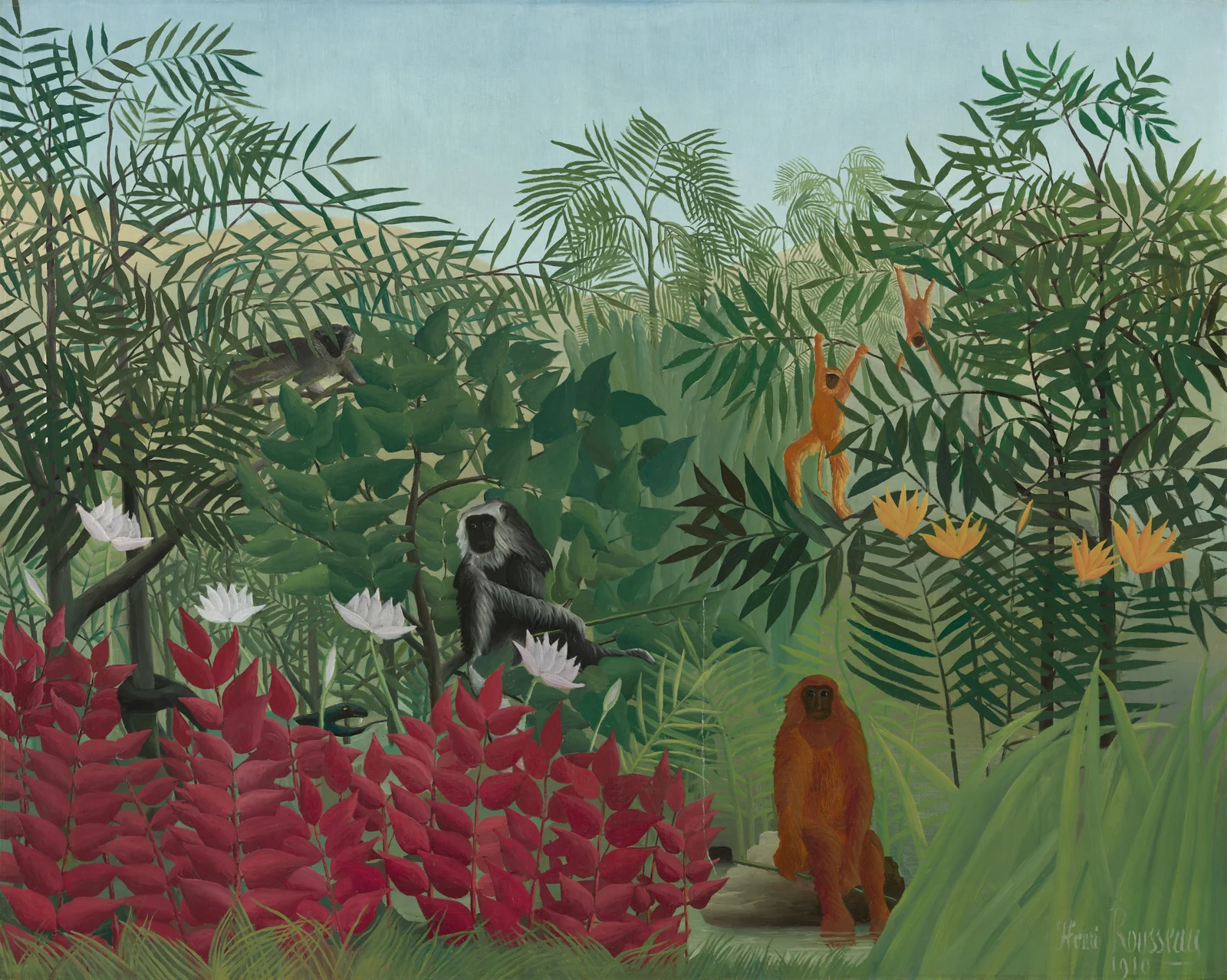
Tropical Forest with Monkeys
Henri Rousseau
1910
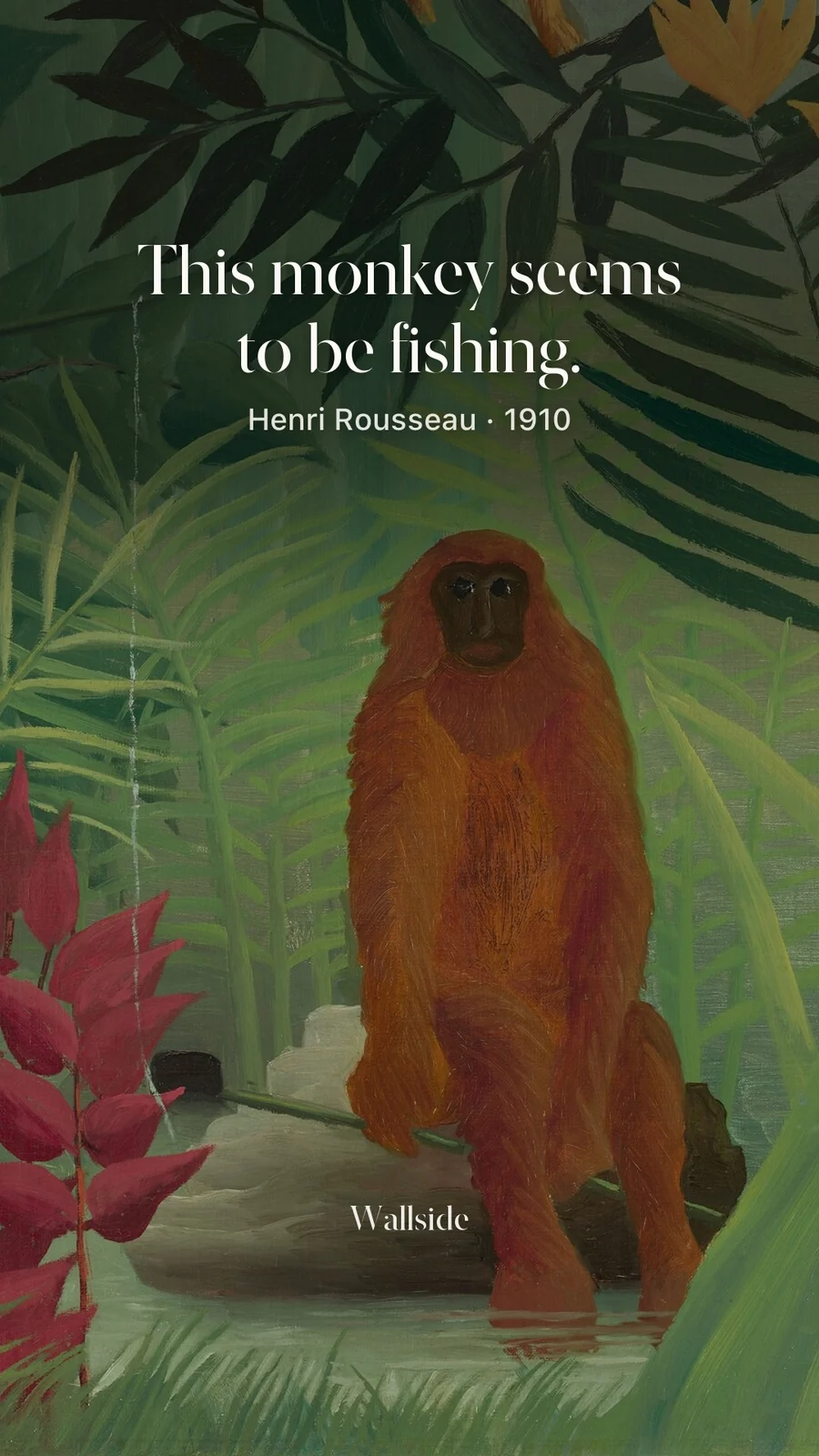
Five monkeys play in a dense forest; the one at lower right holds a thin stick out over a patch of water, as if fishing. Rousseau painted this jungle in the last months of his life. He never left France.
Behind the artwork
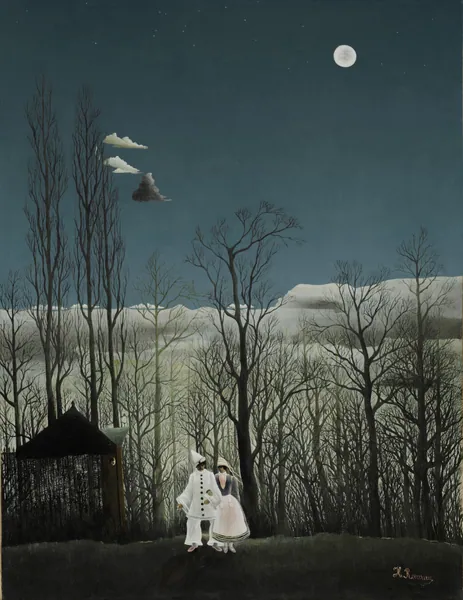
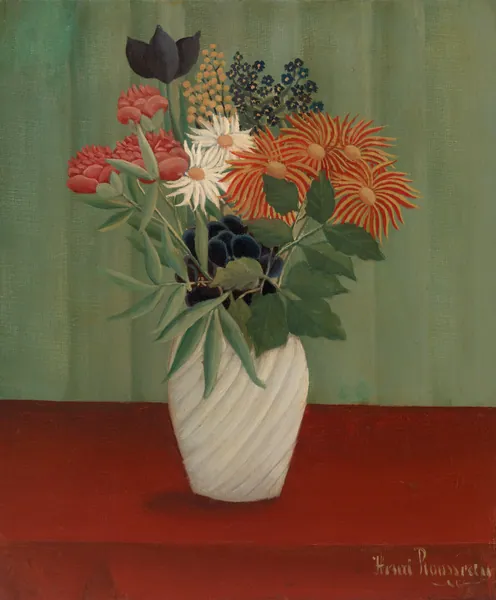
For years Rousseau worked as a clerk at the Paris toll office, which is why he is still called le Douanier, the customs man. He never went to art school and began teaching himself to paint around the age of forty.
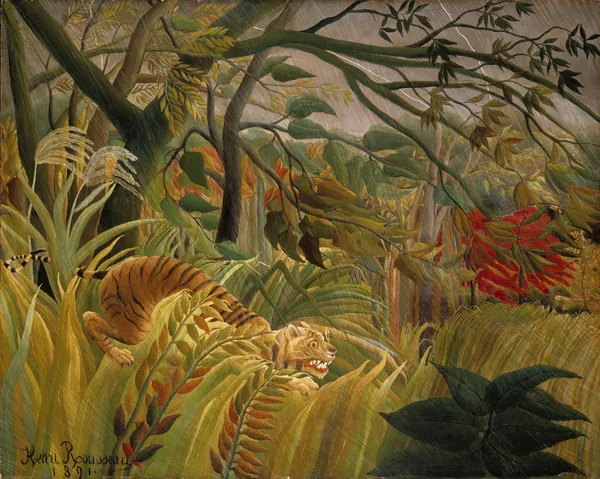
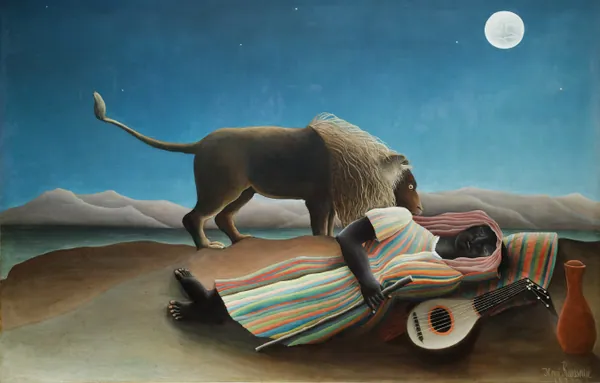
A story once circulated that he had seen the tropics as a soldier in Mexico. The National Gallery of Art's 2006 exhibition text is blunt: Rousseau never left France. His jungles were assembled in Paris, from the botanical gardens, the zoo, colonial expositions, prints and photographs.
That is why his plants are often larger than life, their leaves lined up neatly like specimens, and why his monkeys look a little human. The museum reads these pictures as dreams of escape from city life rather than records of the wild. He died in September 1910.
Our view: this is not a jungle but a Parisian's idea of somewhere far away. Because he had never been there, he painted every leaf as if seeing it for the first time.
Watch the short
A frame for this work
He painted jungles all his life and never left France
The canvas is large and mostly green, so the frame adds warmth without adding green: a pale oak reeded frame and a warm terracotta plaster wall complement the foliage, like hanging the jungle in a sunlit room.
A pale oak reeded frame and a warm terracotta plaster wall bring out dozens of greens.
About the Wallside app