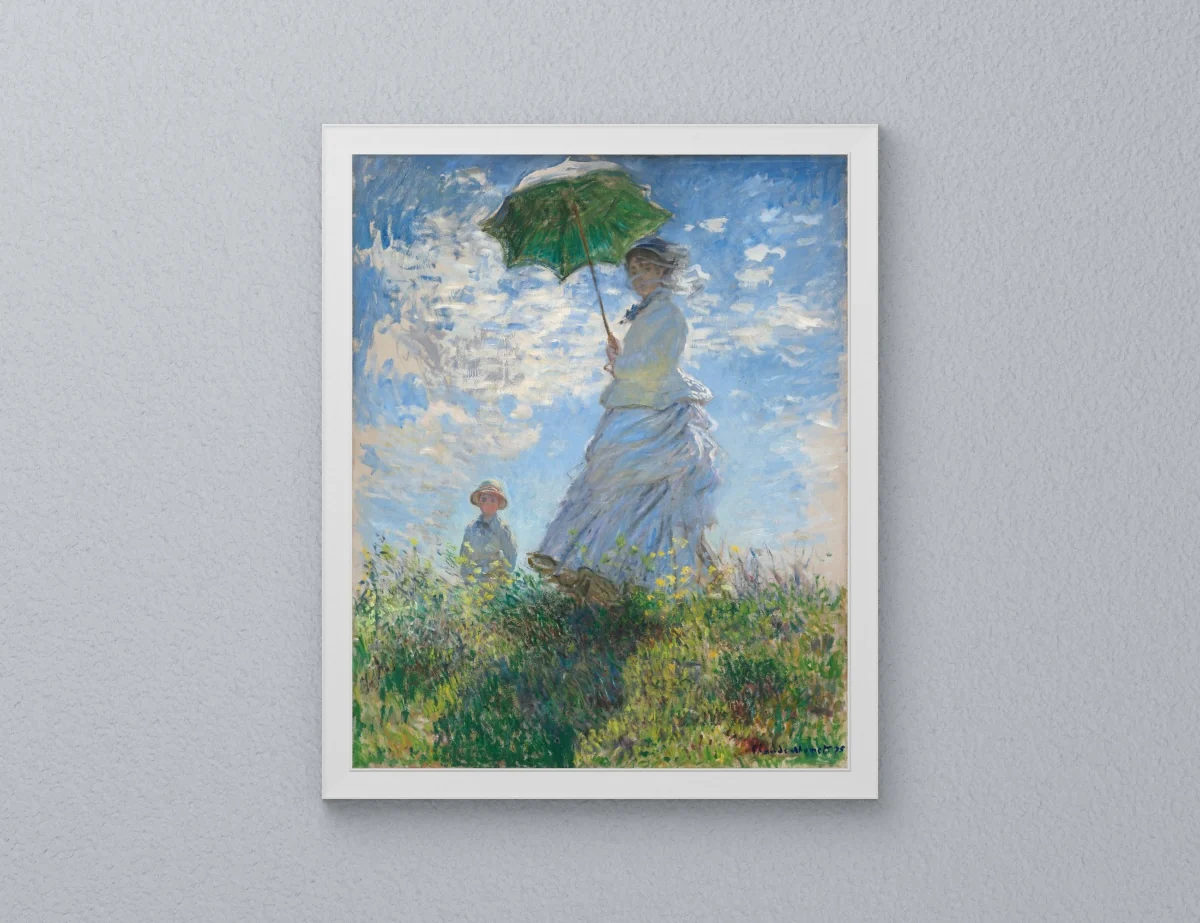
A slim ivory frame and a pale blue-grey wall let the sky run on past the edge.A digital framing study made in Wallside.
THE ARTWORK
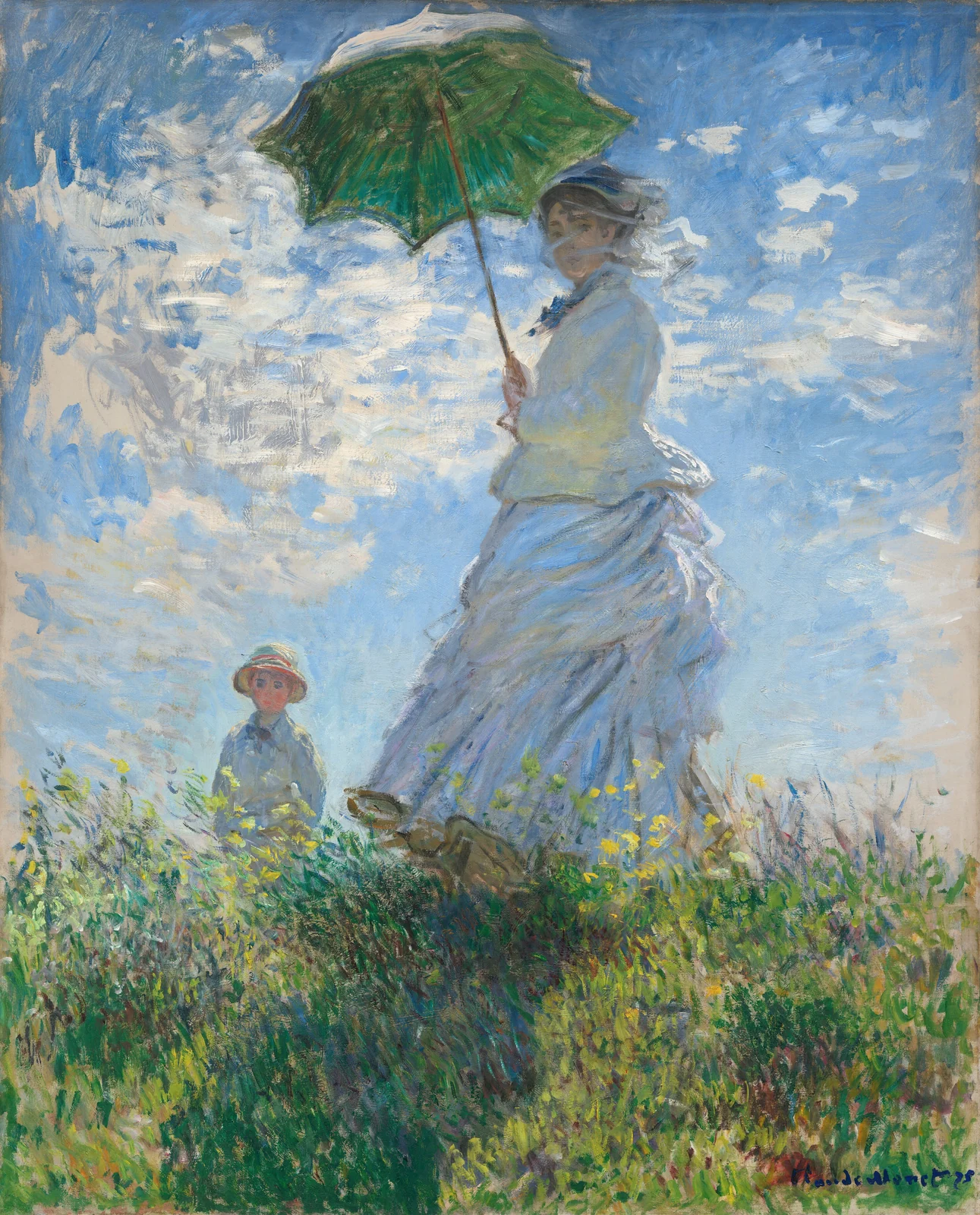
Woman with a Parasol - Madame Monet and Her Son
Claude Monet
1875
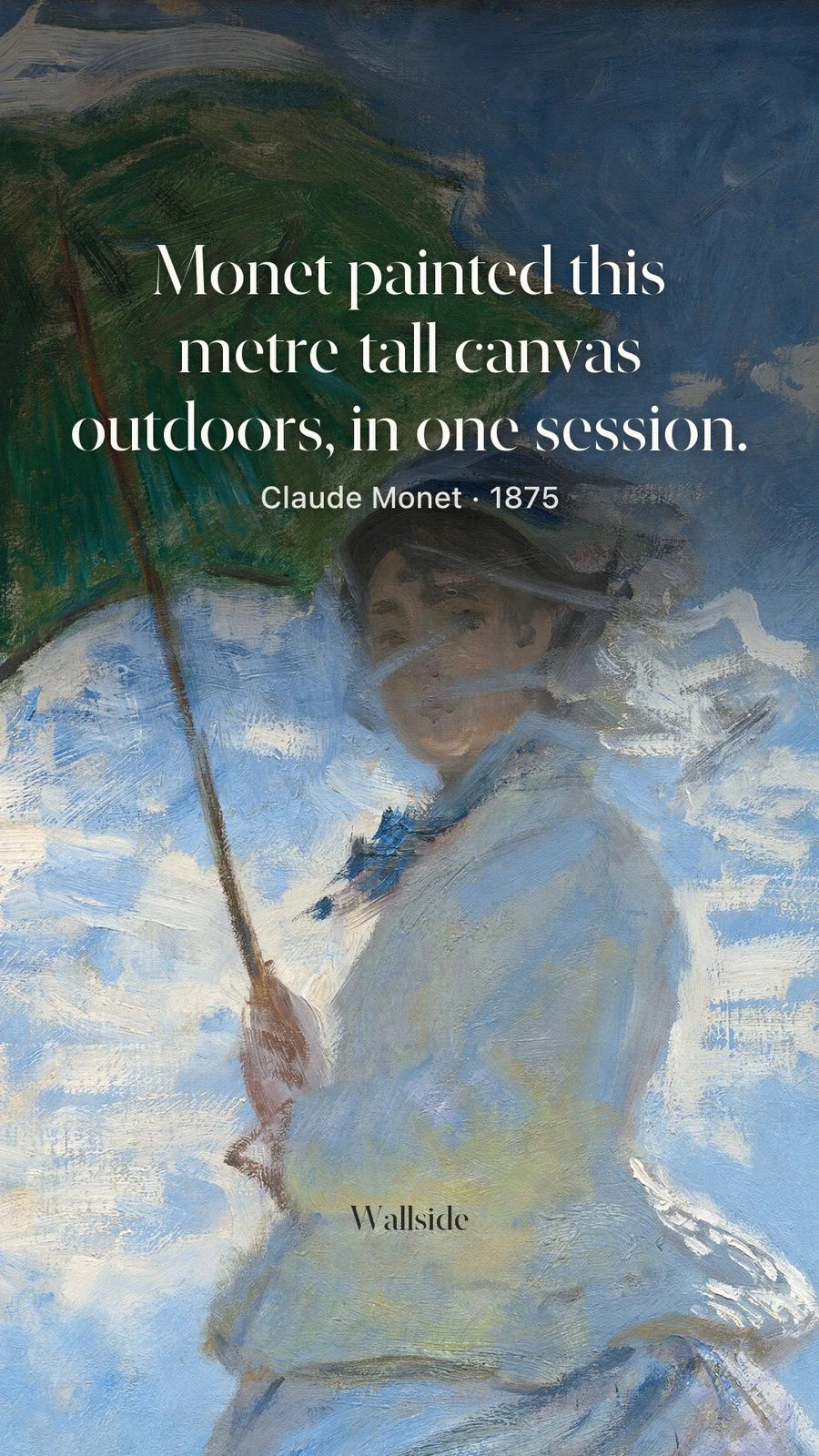
A canvas a metre tall, finished outdoors in a single session. The wind lifts Camille's skirt and veil; their son Jean stands behind the rise. This isn't a posed portrait — it's closer to a snapshot.
Behind the artwork
The woman with the parasol is Monet's wife, Camille, with their son Jean behind her. The National Gallery of Art says the painting was completed in one outdoor session: to catch the moment, Monet swept the sky in with chaotic strokes of blue and grey, and in his haste left patches of canvas bare.
The next year it appeared at the Second Impressionist Exhibition under the title Promenade, and in the same year it was bought by the physician and collector Georges de Bellio.
Eleven years later, in 1886, Monet painted two more women with parasols, titled Study of a Figure Outdoors, now in the Musée d'Orsay: the same slope, the same parasol, one facing left and one facing right. He clearly hadn't forgotten this image.
Our view: the 1875 painting moves us precisely because it wasn't polished. The sky is unfinished, the face indistinct, but the gust of wind is real.
Watch the short
A frame for this work
Wind, painted in an afternoon
Light and wind are the subject here, so the frame stays light: a slim ivory edge that almost dissolves into the sky, on a pale blue-grey wall that carries the clouds outward.
A slim ivory frame and a pale blue-grey wall let the sky run on past the edge.
About the Wallside app